leesmaat.Library
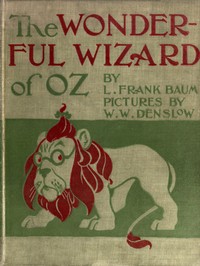
The Wonderful Wizard of Oz source-edition cover

Book · English

The Wonderful Wizard of Oz

L. Frank Baum · 1900 · Intermediate · Complete book

Read in Leesmaat

Public-domain text. Complete reading text is available chapter by chapter in the app and as plain text below. This page previews the opening section.Reading text divided into chapters or scenes; publisher front matter and images are omitted.

25 chapters, scenes or poems
  1. Introduction
  2. Chapter I The Cyclone
  3. Chapter II The Council with the Munchkins
  4. Chapter III How Dorothy Saved the Scarecrow
  5. Chapter IV The Road Through the Forest
  6. Chapter V The Rescue of the Tin Woodman
  7. Chapter VI The Cowardly Lion
  8. Chapter VII The Journey to the Great Oz
  9. Chapter VIII The Deadly Poppy Field
  10. Chapter IX The Queen of the Field Mice
  11. Chapter X The Guardian of the Gate
  12. Chapter XI The Wonderful City of Oz
  13. Chapter XII The Search for the Wicked Witch
  14. Chapter XIII The Rescue
  15. Chapter XIV The Winged Monkeys
  16. Chapter XV The Discovery of Oz, the Terrible
  17. Chapter XVI The Magic Art of the Great Humbug
  18. Chapter XVII How the Balloon Was Launched
  19. Chapter XVIII Away to the South
  20. Chapter XIX Attacked by the Fighting Trees
  21. Chapter XX The Dainty China Country
  22. Chapter XXI The Lion Becomes the King of Beasts
  23. Chapter XXII The Country of the Quadlings
  24. Chapter XXIII Glinda The Good Witch Grants Dorothy’s Wish
  25. Chapter XXIV Home Again
Smart summary· 32 s

This excerpt · 32 s

Covers the excerpt available here, not the whole book.

At a glance

Folklore, legends, myths and fairy tales have followed childhood through the ages, for every healthy youngster has a wholesome and instinctive love for stories fantastic, marvelous and manifestly unreal.

Main talking points

  1. The winged fairies of Grimm and Andersen have brought more happiness to childish hearts than all other human creations.

    Paragraph 1

  2. Modern education includes morality; therefore the modern child seeks only entertainment in its wonder tales and gladly dispenses with all disagreeable incident.

    Paragraph 2

  3. Having this thought in mind, the story of “The Wonderful Wizard of Oz” was written solely to please children of today.

    Paragraph 3

  4. Frank Baum Chicago, April, 1900.

    Paragraph 4

Key sentences selected from this text · available offline

Folklore, legends, myths and fairy tales have followed childhood through the ages, for every healthy youngster has a wholesome and instinctive love for stories fantastic, marvelous and manifestly unreal. The winged fairies of Grimm and Andersen have brought more happiness to childish hearts than all other human creations.

Yet the old time fairy tale, having served for generations, may now be classed as “historical” in the children’s library; for the time has come for a series of newer “wonder tales” in which the stereotyped genie, dwarf and fairy are eliminated, together with all the horrible and blood-curdling incidents devised by their authors to point a fearsome moral to each tale. Modern education includes morality; therefore the modern child seeks only entertainment in its wonder tales and gladly dispenses with all disagreeable incident.

Having this thought in mind, the story of “The Wonderful Wizard of Oz” was written solely to please children of today. It aspires to being a modernized fairy tale, in which the wonderment and joy are retained and the heartaches and nightmares are left out.

L. Frank Baum Chicago, April, 1900.